Beginner Astronomy in India: How to Start Looking Up
You are not late to astronomy. You are standing at the edge of it: one terrace, one balcony, one bright object near the Moon, one question you cannot unsee.
This guide is for the person who is astro not yet. Maybe you saw Jupiter beside the Moon from a Mumbai local platform. Maybe a meteor-shower headline made you step outside. Maybe you are in Pune, Ahmedabad, Delhi, Bengaluru, Chennai, Kolkata, or a smaller town, looking at a washed-out sky and wondering if astronomy is still possible from India. It is. You do not need to begin with a telescope. You need a way to read the sky you actually have.
If you want the full site orientation, start with Newcomer Start Here. If you want one practical first observing plan, stay here. This is the short route from curiosity to your first real field note.
Estimate your local sky before blaming yourself, your eyes, or your gear.
Use Moon phase and observing windows before planning a serious night.
Post the basic question. Basic is where everyone begins.
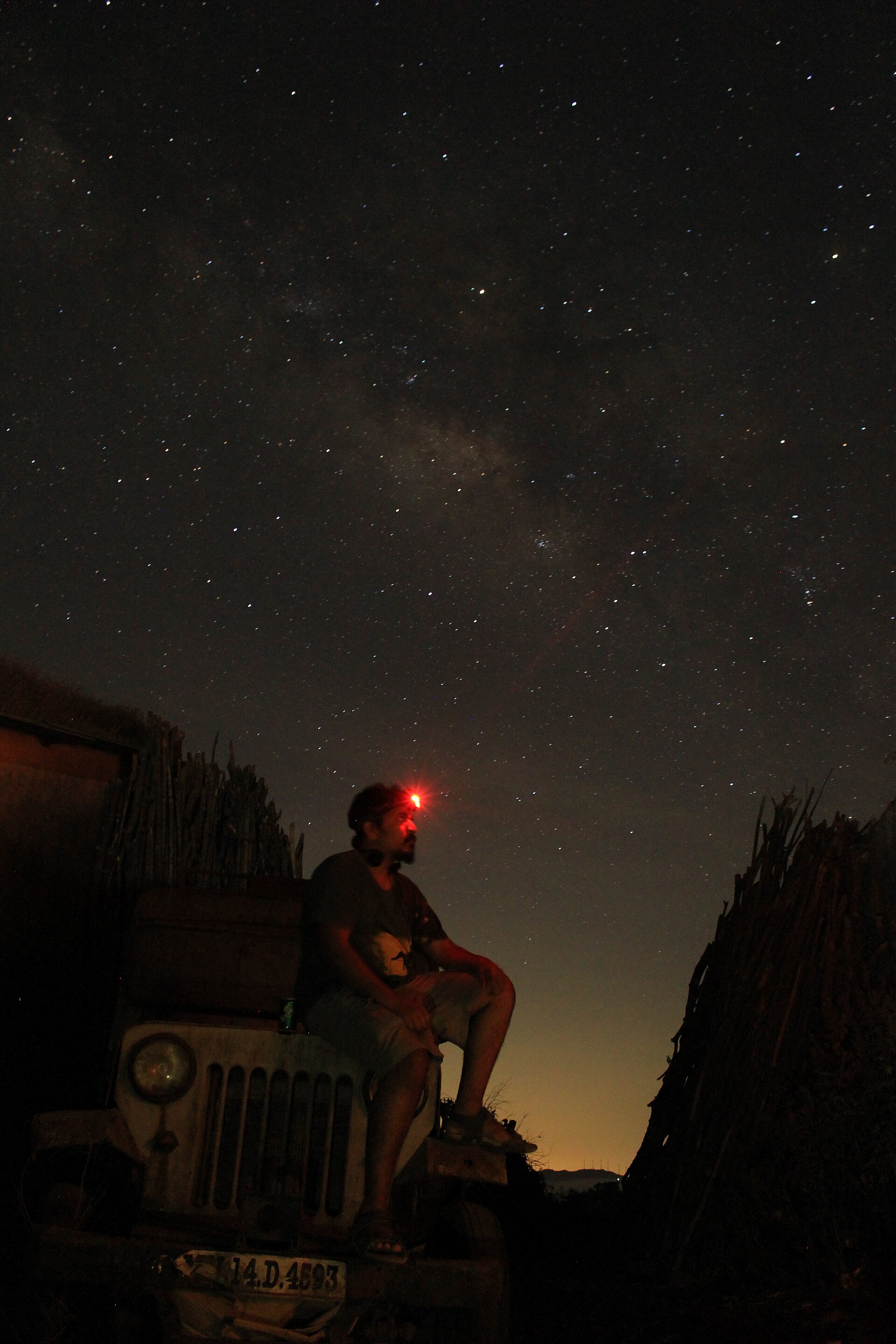
Start From Your Actual Sky
Your first observatory may be a terrace in Mumbai, a balcony in Pune, a society compound in Ahmedabad, a hostel roof in Bengaluru, a Chennai beach road, a Delhi NCR apartment block, a village field, or the space outside your home after the streetlights quiet down. Do not wait for Ladakh, Spiti, Kutch, or a perfect dark-site trip. Begin where you are, then learn what that sky can and cannot show.
On your first night, identify only three things: the Moon, one bright planet or star, and one star pattern you can return to tomorrow. Use a sky app as a map, not as the experience itself. Put the phone down often. The point is not to collect names. The point is to build memory.
The Indian Beginner Has Three Enemies
| Enemy | What it does | What to do first |
|---|---|---|
| Light pollution | Turns faint stars, galaxies, nebulae, and Milky Way structure into background glow. | Run the Bortle Estimator. Match targets to your sky instead of fighting it. |
| Weather and haze | Clouds, humidity, dust, smoke, and winter haze can make a technically clear night useless. | Use the Strategic Calendar for planning, then verify the actual sky before travelling. |
| Expectation shock | Internet images make beginners expect colour posters through eyepieces. | Read what a telescope really shows before buying or judging your first view. |
This is why AstroNotYet exists. India does not need more vague advice copied from northern-hemisphere backyard blogs. We need field-aware guidance for polluted city skies, monsoon gaps, coastal humidity, unsafe isolated roads, apartment storage limits, and beginners who are curious but not yet surrounded by astronomy friends.
Your First Seven-Night Mission
- Night 1: Find the Moon. Note its phase. Sketch one crater edge or shadow line, badly if needed.
- Night 2: Identify one bright planet or star. Do not chase ten objects.
- Night 3: Learn one pattern: Orion, Scorpius, the Summer Triangle, the Big Dipper, or whatever your sky gives you.
- Night 4: Run the Bortle Estimator for your home sky and accept the result as data, not judgement.
- Night 5: Check the Strategic Calendar and choose one upcoming Moon-friendly night.
- Night 6: Try binoculars if you have them. If not, repeat naked-eye observing. Repetition is not boring; it is calibration.
- Night 7: Write one entry in Mission Log: time, place, sky condition, what you saw, what confused you, and what to try next.
This is enough to begin because it creates the habit that every real observer depends on: returning to the sky with slightly better questions.
Do Not Buy A Telescope First
A telescope can be wonderful, but it is a terrible substitute for orientation. Beginners often buy too early, then discover that the mount shakes, the sky is hazy, the Moon is too bright for deep-sky targets, or the object they expected to see is not visible from their location. Read the first telescope buying guide before spending money.
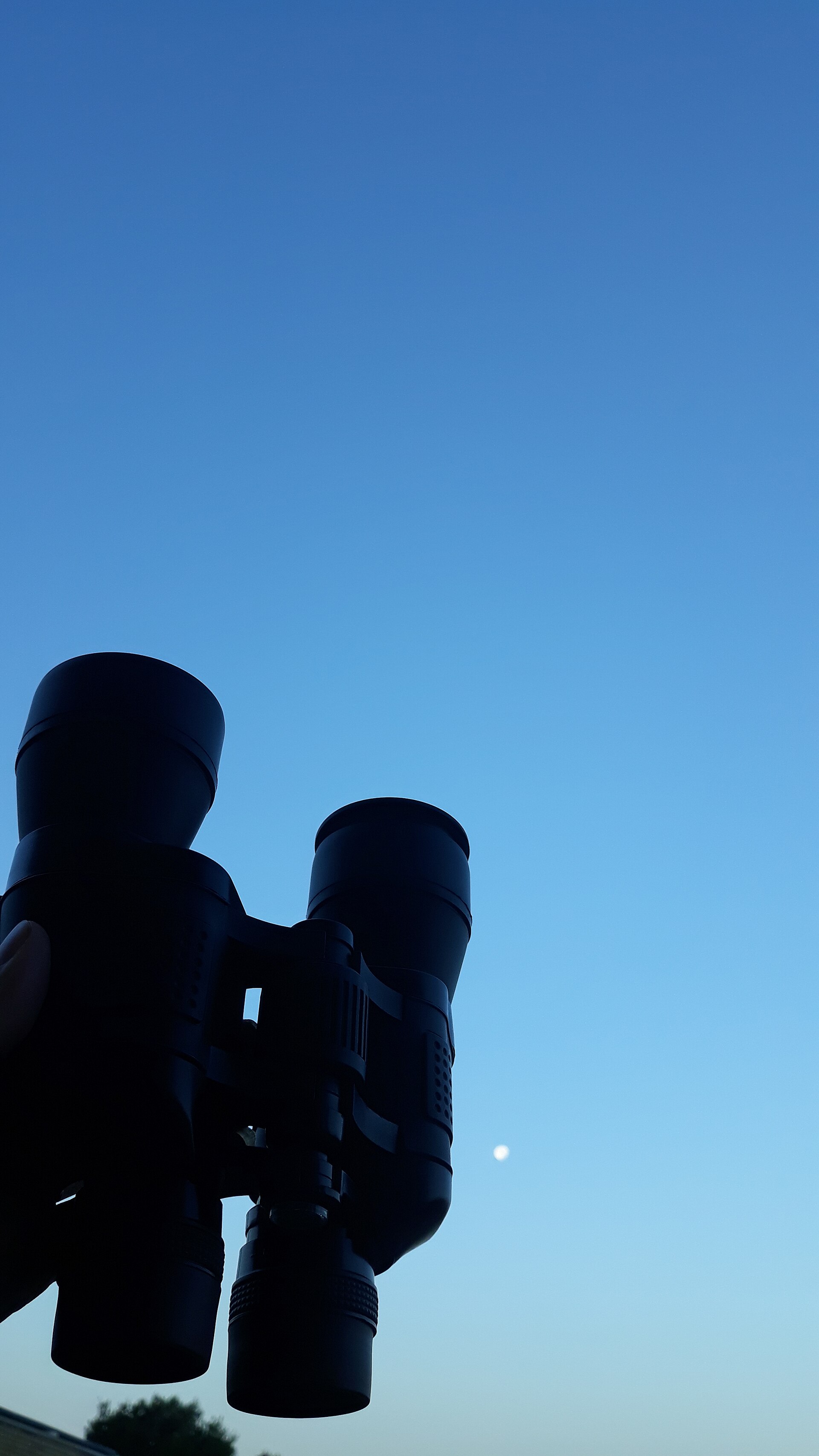
If you have 7×50 or 10×50 binoculars at home, use them. Look at the Moon, Pleiades, Orion, bright star fields, and the Milky Way from a dark site. If you do not own binoculars, that is also fine. Naked-eye astronomy is not a lesser version of the hobby. It is the foundation.
Move From Wonder To Practice
The difference between a casual sky moment and astronomy is not expensive gear. It is returning. Check the same planet tomorrow. Watch the Moon change shape. Notice that some stars rise earlier every month. Learn why a full-Moon night is bad for galaxies but excellent for lunar detail. Ask why a telescope performs differently from a city terrace and a rural field. The hobby becomes real when the sky stops being random.
When you are ready to leave home, use Sector Recon and the Bortle scale guide before choosing a site. When you are ready to discuss a doubt, use the Beginner Questions channel. When you are ready to buy, ask in Telescope Buying Advice before the purchase becomes regret.
Use AstroNotYet As Your First Console
AstroNotYet is built for the threshold. Start at Start Here when you need the larger map. Use the Training Deck when you want tools and simulations. Use the Planetary Analyzer when a bright planet catches your eye. Use Mission Log when you want your observing to become a record instead of a memory leak. The site is not meant to be consumed in one sitting. It is meant to become a field console you return to.
For the newcomer, the goal is not to sound like an expert. The goal is to notice more than you noticed last week. If you can do that, you have already crossed the line from “interested in space” to beginning astronomy.
Next signal: open Newcomer Start Here, run the Bortle Estimator for your home sky, choose one night from the Strategic Calendar, and log what actually happened in Mission Log.
Ask The Beginner Question
No gatekeeping. If this report raised a basic question, ask it openly. Someone else is probably stuck on the same first step.