System Archive
Standard Data Feed
A telescope does not show space like a NASA image. It shows you photons in real time, through your sky, your atmosphere, your optics, your patience, and your expectations.
This guide is for the Indian beginner asking the most honest telescope question: what will I actually see? Read the first telescope buying guide before buying, use the Bortle Estimator to understand your sky, and come back here when a product listing promises impossible magnification. The answer depends less on the box and more on your target, sky darkness, seeing, aperture, mount stability, and whether your eyes know what to look for.
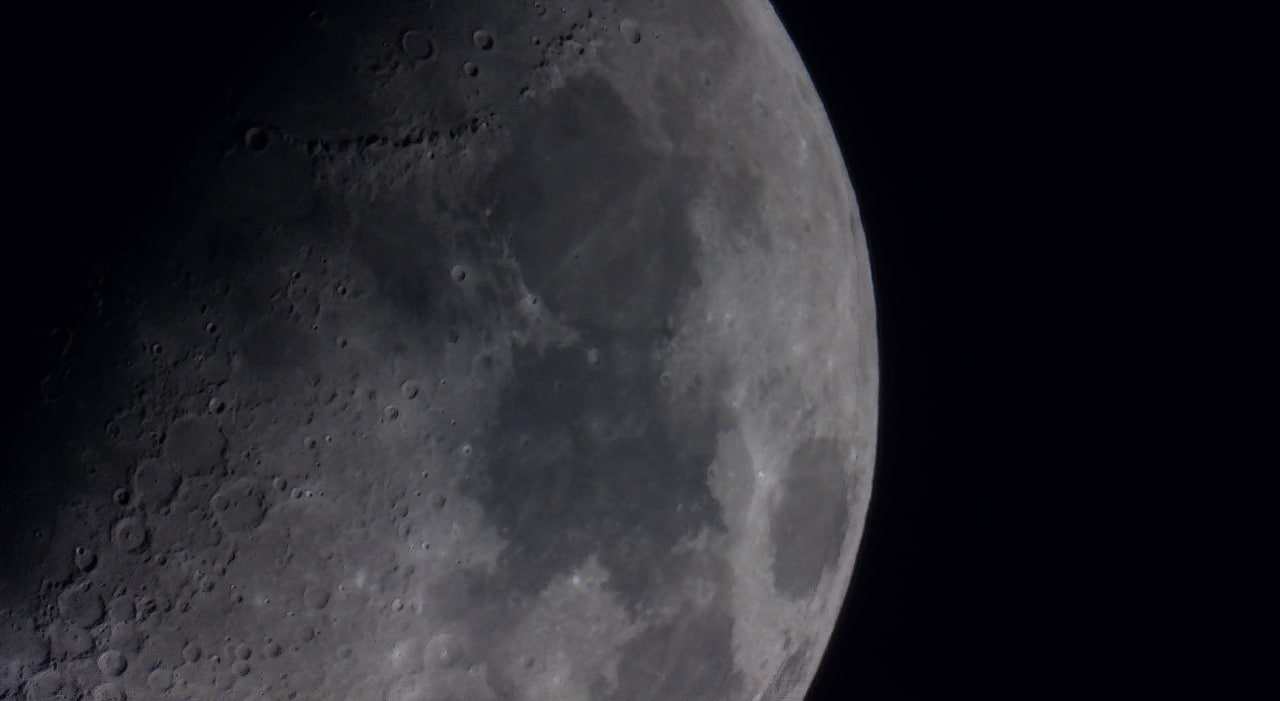
The Moon Will Look Real
The Moon is where most beginners first understand why telescopes matter. Even a small telescope can show crater rims, mountain shadows, mare boundaries, rough highlands, and the moving line between lunar day and night. The best lunar views often happen around first quarter or last quarter, not full Moon, because low-angle sunlight creates shadows and relief.
If you want a first win, start here. Do not chase 300x magnification. Use a stable mount, let the telescope cool if needed, begin with low power, and increase slowly. If the image shimmers, the atmosphere is limiting you.
Planets Are Small But Alive
| Planet | What beginners can realistically see | Best helper |
|---|---|---|
| Jupiter | A bright disk, cloud bands in steady seeing, and four Galilean moons changing position night to night. | Planetary Analyzer |
| Saturn | The ring system as a tiny but unmistakable structure; sometimes the Cassini Division in larger scopes and steady skies. | Patient viewing at medium-high power |
| Venus | Phases like a tiny Moon, not surface detail. | Observe safely away from the Sun |
| Mars | A small orange disk; surface detail only near favourable opposition and with good seeing. | Expectation control |
Planets reward repeat visits. Jupiter is not one object; it is a system. Its moons move. Shadows transit. The Great Red Spot appears only at certain times. Saturn changes ring tilt over years. The telescope does not turn planets into posters. It turns them into events.
Galaxies And Nebulae Are Not Bright Posters
This is where many beginners feel disappointed. Most galaxies through a small telescope look like faint grey smudges. Many nebulae are subtle. Colour is usually absent visually because human night vision is not very colour-sensitive. The Orion Nebula can feel magical, especially from darker skies, but it will still not look like a processed astrophotography image.
Darkness matters more than beginners expect. A telescope in a Bortle 8 city sky can lose galaxies that become visible through binoculars from a rural sky. If deep-sky objects are your dream, read the Bortle guide and use Sector Recon before blaming your telescope.
What Different Skies Do To The Same Telescope
| Sky | Good targets | Likely disappointment |
|---|---|---|
| Bright city terrace | Moon, planets, double stars, bright clusters, Sun with proper solar filter | Faint galaxies, faint nebulae, Milky Way structure |
| Suburban/rural edge | Orion Nebula, Pleiades, Beehive, brighter Messier objects, binocular sweeps | Very faint galaxies and low-surface-brightness nebulae |
| Dark rural sector | Milky Way, nebulae, galaxies, globular clusters, wide-field binocular observing | Only if Moon, clouds, humidity, or unsafe logistics ruin the night |
Aperture Helps, But It Does Not Fix Everything
A larger telescope gathers more light and resolves finer detail, but aperture cannot remove clouds, haze, bad seeing, poor collimation, a shaky mount, or light pollution. A small stable telescope used often can teach more than a large instrument that is too heavy to carry outside. Compare realistic gains in Aperture Lab before assuming bigger automatically means better.
The First Ten Targets To Try
- The Moon near first quarter.
- Jupiter and its four bright moons.
- Saturn when it is high in the sky.
- Venus phases.
- Orion Nebula from the darkest sky you can reach.
- Pleiades through binoculars or low telescope power.
- Beehive Cluster in Cancer.
- Albireo or another colourful double star.
- A bright globular cluster such as M13 when seasonally visible.
- The Milky Way with naked eyes or binoculars from a dark site.
Use the Strategic Calendar to choose nights, the Field of View Calculator to understand framing, and Mission Log to record what you actually saw. The log matters because your eyes improve. A faint smudge in month one can become a galaxy with structure in month six.
Visual Observing And Astrophotography Are Different Missions
Many images online are stacked, sharpened, stretched, and processed from long exposures. That is not fraud; it is a different technique. Your eye sees live photons. A camera accumulates them. If you want camera results, read the astrophotography guide. If you want eyepiece observing, train your eye and your patience.
Next signal: run your home sky through the Bortle Estimator, compare aperture in Aperture Lab, then choose one lunar or planetary target for your first telescope night.
Your first telescope should not impress people in a product listing. It should survive your actual life: Indian skies, balcony space, storage limits, shaky terraces, power cuts, humid nights, dusty roads, and the first month when you are still learning where Saturn is.
The first telescope can either open the sky or quietly kill the hobby. In India, the danger is not only price. The danger is buying a scope that looks powerful in a product photo but shakes, frustrates, and shows less than expected. Before you spend money, check your observing sky with the Bortle Estimator, compare realistic aperture gains in Aperture Lab, and only then start browsing the telescope listings in the Supply Depot.
If you are buying new, do not make Amazon or general online marketplaces your first stop. They are fine for many things, but beginner telescope listings often reward the wrong signals: huge magnification claims, toy-grade tripods, vague accessories, unknown after-sales support, and confusing imports. If you have access to a real telescope shop or astronomy-focused dealer, start there. You want someone who can talk about your sky, your targets, the mount, warranty, spares, eyepieces, collimation, and what the scope will actually show.
Trusted New-Buy Starting Points In India
For Mumbai, check Tejraj; if you can visit or call, ask telescope questions before deciding. For Ahmedabad, check Vorion Scientific. For Pune, check Modern Telescopes. These are specialist astronomy/scientific-equipment sellers, which matters because a first telescope is not only a product purchase. It is also a support, expectation, and upgrade-path decision.
Do Not Buy The Magnification Number
If a beginner telescope is sold mainly with huge magnification claims, be suspicious. Useful magnification depends on aperture, optical quality, mount stability, eyepieces, and atmospheric seeing. A small scope claiming 525x is usually a warning signal, not a feature. On most Indian nights, atmosphere and mount stability will stop you long before the number on the box does.
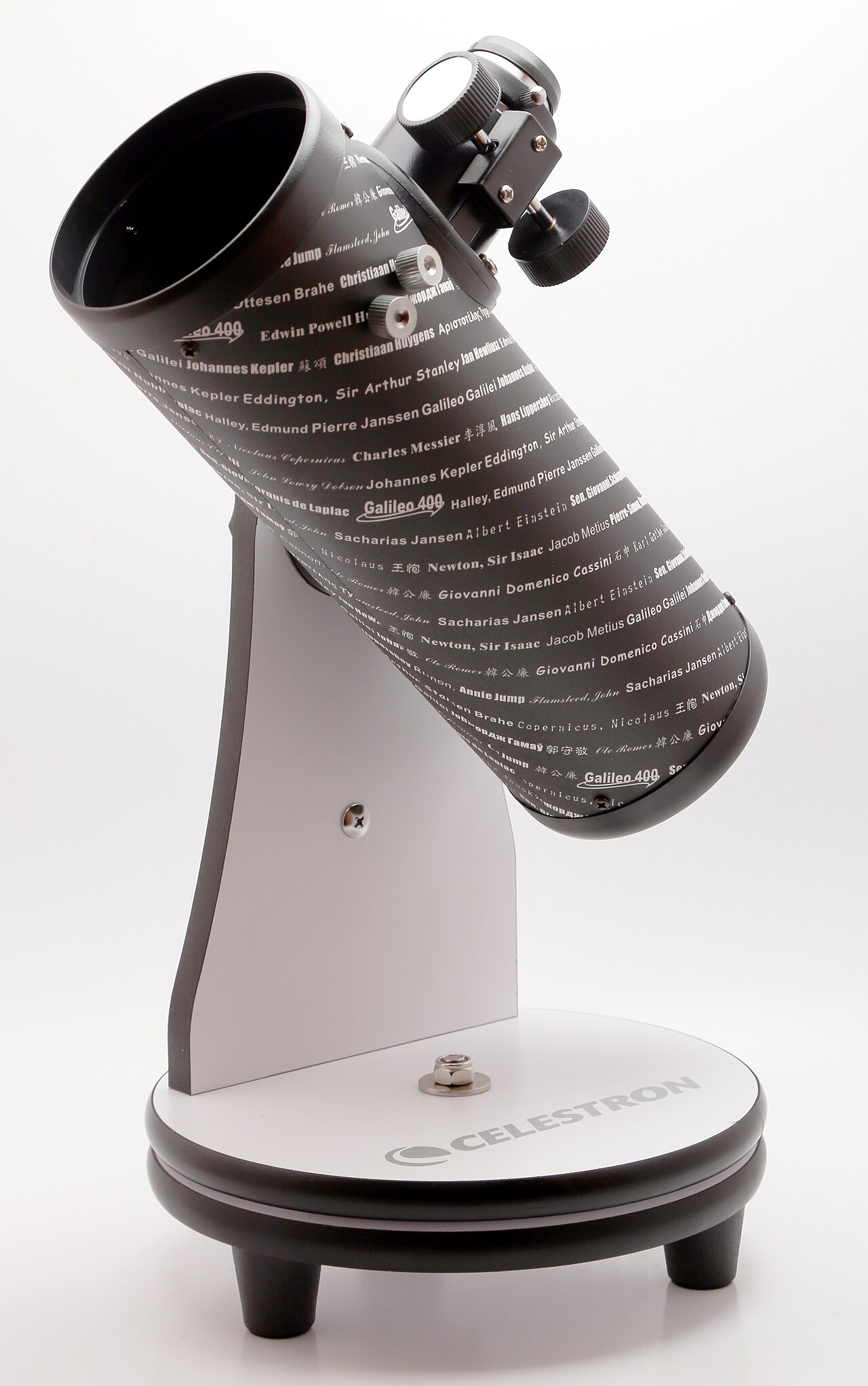
The Mount Matters
A telescope is only as usable as the mount beneath it. A decent optical tube on a shaky tripod is a bad experience. For beginners, a simple stable mount is better than a complicated unstable one. Smooth movement matters when tracking the Moon, planets, and bright deep-sky objects. If you are buying used, inspect mount listings with the same seriousness as optical tubes.
Good First Paths
| Path | Best for | Watch out for |
|---|---|---|
| 10×50 binoculars | Learning constellations, Moon, star fields, travel skies, low-risk entry | Cheap binoculars with poor alignment; hand shake without support |
| Small refractor | Moon, planets, quick balcony sessions, low maintenance | Weak tripods, narrow accessories, overpromised magnification |
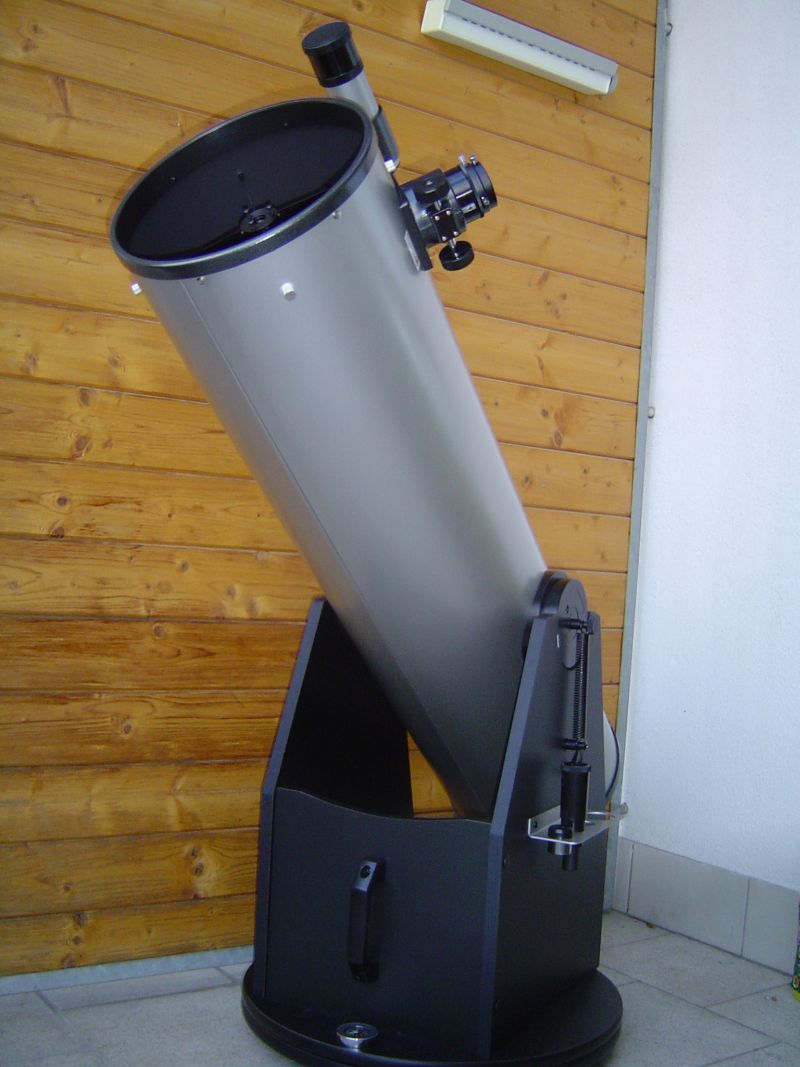
| Tabletop Dobsonian | Simple visual observing, Moon, planets, brighter deep-sky objects | Needs a stable table or platform; not ideal if storage is awkward |
| Full-size Dobsonian | Maximum visual aperture per rupee, deep-sky from darker locations | Bulky tube/base, collimation, transport, stairs, car space |
| Smart telescope | Urban imaging and assisted viewing | Teaches a different skill path; less hands-on sky learning |
Notice that none of these paths starts with “largest possible telescope.” The correct first instrument is the one you will actually carry outside on a tired weekday. If it needs two people, a car, perfect collimation, and a dark site every time, it may be a wonderful second telescope and a terrible first one.
Before You Buy Used
- Ask for clear photos of mirrors, lenses, focuser, mount head, tripod/base, accessories, and storage marks.
- For reflectors, ask when collimation was last done and whether the primary mirror coating looks clean and even.
- For refractors, check for fungus, haze, scratches, bent focusers, and missing caps.
- For electronic mounts, ask for a powered-on video, hand controller status, tracking test, and included cables.
- Check whether eyepieces, finder scope, dovetail, diagonal, power adapter, and manuals are included.
- Meet safely, test movement, and avoid urgency traps. “Leaving today, pay now” is not astronomy. It is pressure.
This is where the Supply Depot classifieds should become more than a listing page. Use it as a checklist. Compare telescope posts, compare mount condition, ask sellers better questions, and keep notes. If you are still unsure how a focal length and eyepiece combination will behave, run the numbers in the Field of View Calculator before you buy.
Buy For The Sky You Have
A city observer with Bortle 8 skies may get more joy from a stable lunar/planetary setup than from chasing faint galaxies. A rural observer with space to store a Dobsonian can choose aperture more aggressively. Someone living in an apartment with stairs should care about weight before aperture. Someone who wants deep-sky photography should think about mount quality before telescope size.
If you choose a reflector, learn the Collimation Protocol early. If you choose binoculars or a small refractor, learn the sky first and let the upgrade path reveal itself. If you are astro not yet, your first purchase should make you more curious after ten nights, not exhausted after two.
Next signal: check your sky with the Bortle Estimator, compare aperture in Aperture Lab, then browse used telescopes only after you know the mission.