Astronomy Events in India: How to Find Star Parties, Talks, and Skywatching Nights
Astronomy feels lonely only until you stand beside another person who can point at a blank-looking sky and say, wait, look again. In India, the right event can turn curiosity into belonging in a single night.
This guide is for newcomers trying to find astronomy events in India without falling into random forwards, vague Instagram posters, or expensive stargazing trips that promise more than the sky can deliver. Use the AstroNotYet Events Monitor for site signals, check the community frequency for local chatter, and use this page to judge any club, planetarium session, workshop, star party, or public skywatching night before you register.
Event Signal Check
Who
Named organizer, club, institution, volunteers, or educators.
Where
Clear venue, transport plan, access, permissions, and safety path.
Sky
Moon phase, cloud risk, light pollution, and realistic targets stated.
After
Refund, reschedule, backup talk, or honest weather contingency.
What Counts As An Astronomy Event?
Do not limit your search to overnight star parties. In India, astronomy events can be public telescope nights, planetarium shows, science-centre sky observations, talks by researchers, school outreach, meteor-shower watches, eclipse sessions, astrophotography workshops, telescope demos, club meetings, online lectures, and informal terrace meets. For an astro-not-yet newcomer, a one-hour Moon session can be more valuable than an all-night trip you are not ready for.
Where To Start Looking
Start with known institutions and clubs, then branch outward. In Mumbai, check Khagol Mandal, the Nehru Centre Planetarium, and Nehru Science Centre sky-observation programmes. Around Pune, check Jyotirvidya Parisanstha and IUCAA public outreach signals. For Mumbai-Pune paid trips and workshops, also compare groups such as Amateur Astronomy Club, then verify every current event page before paying.
High-trust signals
Planetariums, science centres, long-running amateur clubs, university outreach pages, and events where the organizer, location, schedule, and weather policy are clearly stated.
Low-trust signals
Huge promises, no Moon/weather mention, no organizer history, unclear refund policy, unsafe transport plan, copied sky photos, or pressure to pay quickly.
How To Judge A Star Party Before Registering
| Question | Why it matters | Good answer sounds like |
|---|---|---|
| What is the Moon phase? | A bright Moon can erase deep-sky expectations. | Targets are matched to Moon conditions, not oversold. |
| What if clouds arrive? | Indian weather can collapse a perfect poster. | Clear backup plan, refund/reschedule policy, or honest risk note. |
| Who is leading? | Beginners need orientation, not just transport. | Named astronomers, volunteers, club members, or educators. |
| What will beginners actually see? | Realistic expectations protect enthusiasm. | Moon, planets, bright clusters, constellations, or deep-sky targets depending on sky. |
| How safe is the site? | Darkness is useless if the ground plan is bad. | Known site, parking, toilets/basic facilities, return timing, emergency contact. |
Match The Event To Your Stage
If you are brand new, begin with a planetarium show, public telescope night, or club meeting. If you already know the Moon, Jupiter, Saturn, and a few constellations, try a short local observing session. If you have stayed awake under the sky before and understand Moon phase, transparency, and basic field etiquette, an overnight dark-sky event becomes more useful.
Before travelling, read the Bortle guide and the Mumbai-Pune stargazing field guide. They will help you understand why some events choose certain dates, why monsoon ruins plans, why full-Moon trips behave differently, and why a safe Bortle 5 night can be better than a reckless chase for Bortle 2 darkness.
What To Carry To Your First Event
- Warm layer, even when the city feels hot.
- Water, simple food, and any medicine you may need.
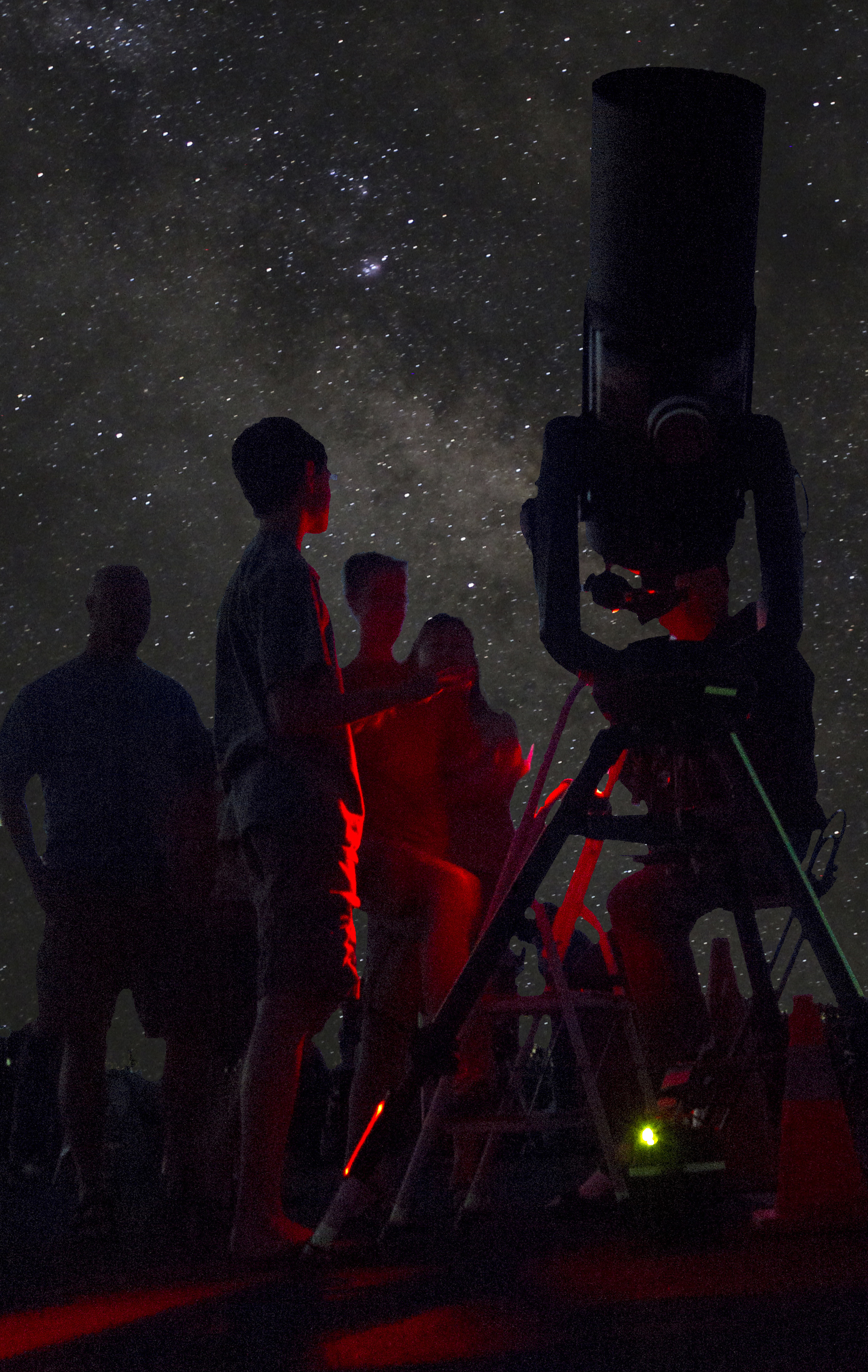
- Red light or dim flashlight; avoid blasting white phone light near telescopes.
- Power bank, offline map, and emergency contact details.
- Notebook or the Mission Log habit: time, sky, target, what you saw, what confused you.
- Binoculars if you already have them; do not buy gear just to attend.
- Patience. A queue at a telescope is still part of the night.
How To Behave Around Telescopes
Do not touch optics, eyepieces, focusers, or mounts unless invited. Ask before taking flash photos. Keep lights low. Let children look, but keep hands controlled. If you cannot see the object, say so; a good volunteer will refocus, re-aim, or explain what to look for. The most useful sentence at your first event is not “wow.” It is “what should I be noticing?”
Use AstroNotYet To Keep The Signal Alive
An event should not be a one-night souvenir. After you return, log what happened in Mission Log, check upcoming windows in the Strategic Calendar, ask follow-up questions in the forums, and watch the Events Monitor for the next signal. If you attended a good session, share a short field report so another beginner can find the path faster.
Next signal: open the Events Monitor, check one local club or planetarium page, then choose one beginner-safe event you can actually attend this month.
Share An Astronomy Event
Public observing night, club meet, planetarium show, workshop, or star party? Add it where Indian beginners can actually find it.