What Can You See Through a Telescope in India?
A telescope does not show space like a NASA image. It shows you photons in real time, through your sky, your atmosphere, your optics, your patience, and your expectations.
This guide is for the Indian beginner asking the most honest telescope question: what will I actually see? Read the first telescope buying guide before buying, use the Bortle Estimator to understand your sky, and come back here when a product listing promises impossible magnification. The answer depends less on the box and more on your target, sky darkness, seeing, aperture, mount stability, and whether your eyes know what to look for.
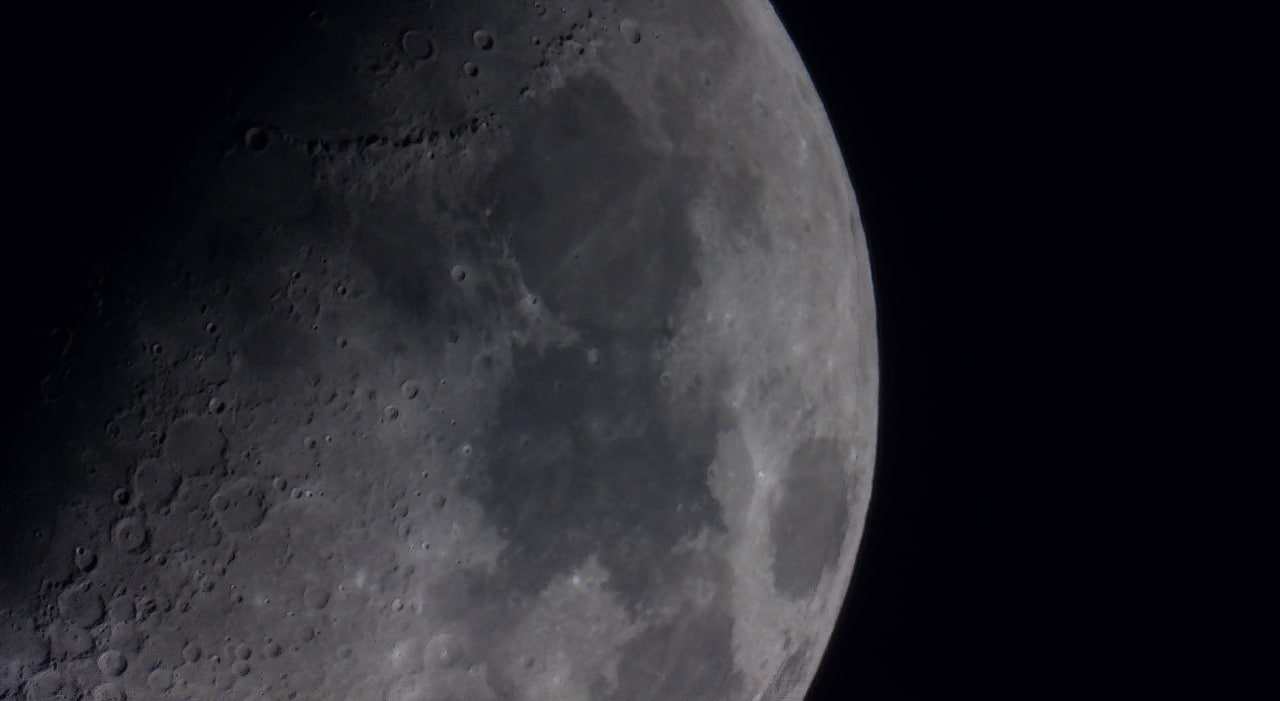
The Moon Will Look Real
The Moon is where most beginners first understand why telescopes matter. Even a small telescope can show crater rims, mountain shadows, mare boundaries, rough highlands, and the moving line between lunar day and night. The best lunar views often happen around first quarter or last quarter, not full Moon, because low-angle sunlight creates shadows and relief.
If you want a first win, start here. Do not chase 300x magnification. Use a stable mount, let the telescope cool if needed, begin with low power, and increase slowly. If the image shimmers, the atmosphere is limiting you.
Planets Are Small But Alive
| Planet | What beginners can realistically see | Best helper |
|---|---|---|
| Jupiter | A bright disk, cloud bands in steady seeing, and four Galilean moons changing position night to night. | Planetary Analyzer |
| Saturn | The ring system as a tiny but unmistakable structure; sometimes the Cassini Division in larger scopes and steady skies. | Patient viewing at medium-high power |
| Venus | Phases like a tiny Moon, not surface detail. | Observe safely away from the Sun |
| Mars | A small orange disk; surface detail only near favourable opposition and with good seeing. | Expectation control |
Planets reward repeat visits. Jupiter is not one object; it is a system. Its moons move. Shadows transit. The Great Red Spot appears only at certain times. Saturn changes ring tilt over years. The telescope does not turn planets into posters. It turns them into events.
Galaxies And Nebulae Are Not Bright Posters
This is where many beginners feel disappointed. Most galaxies through a small telescope look like faint grey smudges. Many nebulae are subtle. Colour is usually absent visually because human night vision is not very colour-sensitive. The Orion Nebula can feel magical, especially from darker skies, but it will still not look like a processed astrophotography image.
Darkness matters more than beginners expect. A telescope in a Bortle 8 city sky can lose galaxies that become visible through binoculars from a rural sky. If deep-sky objects are your dream, read the Bortle guide and use Sector Recon before blaming your telescope.
What Different Skies Do To The Same Telescope
| Sky | Good targets | Likely disappointment |
|---|---|---|
| Bright city terrace | Moon, planets, double stars, bright clusters, Sun with proper solar filter | Faint galaxies, faint nebulae, Milky Way structure |
| Suburban/rural edge | Orion Nebula, Pleiades, Beehive, brighter Messier objects, binocular sweeps | Very faint galaxies and low-surface-brightness nebulae |
| Dark rural sector | Milky Way, nebulae, galaxies, globular clusters, wide-field binocular observing | Only if Moon, clouds, humidity, or unsafe logistics ruin the night |
Aperture Helps, But It Does Not Fix Everything
A larger telescope gathers more light and resolves finer detail, but aperture cannot remove clouds, haze, bad seeing, poor collimation, a shaky mount, or light pollution. A small stable telescope used often can teach more than a large instrument that is too heavy to carry outside. Compare realistic gains in Aperture Lab before assuming bigger automatically means better.
The First Ten Targets To Try
- The Moon near first quarter.
- Jupiter and its four bright moons.
- Saturn when it is high in the sky.
- Venus phases.
- Orion Nebula from the darkest sky you can reach.
- Pleiades through binoculars or low telescope power.
- Beehive Cluster in Cancer.
- Albireo or another colourful double star.
- A bright globular cluster such as M13 when seasonally visible.
- The Milky Way with naked eyes or binoculars from a dark site.
Use the Strategic Calendar to choose nights, the Field of View Calculator to understand framing, and Mission Log to record what you actually saw. The log matters because your eyes improve. A faint smudge in month one can become a galaxy with structure in month six.
Visual Observing And Astrophotography Are Different Missions
Many images online are stacked, sharpened, stretched, and processed from long exposures. That is not fraud; it is a different technique. Your eye sees live photons. A camera accumulates them. If you want camera results, read the astrophotography guide. If you want eyepiece observing, train your eye and your patience.
Next signal: run your home sky through the Bortle Estimator, compare aperture in Aperture Lab, then choose one lunar or planetary target for your first telescope night.
Ask Before You Buy
Shortlist, budget, city sky, storage, and expectations all matter. Put the model in front of the community before spending money.